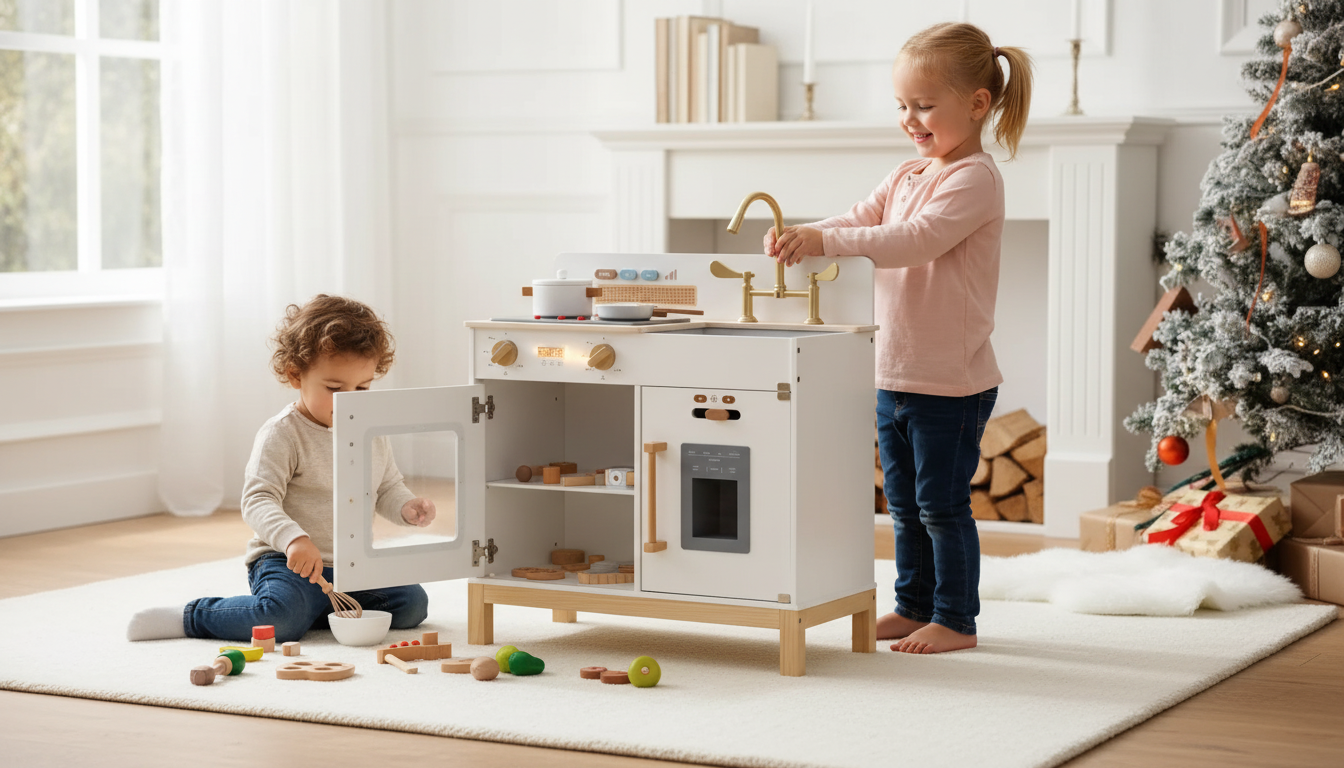
A wooden play kitchen that lights up and makes realistic sounds turns pretend play into an experience kids can see, hear, and act out. For ages 3+, it’s a gift that invites daily role-play—cooking, cleaning, serving, and sharing—while supporting language, coordination, and social skills in a screen-free way. For more guidance, see Getting Dirty | The Sun Magazine.
Pretend kitchens are also a natural fit for this age because play often mirrors real life: making “breakfast,” washing dishes, and setting out cups for guests. That familiar routine helps kids feel capable while practicing new words, following steps, and staying engaged for longer stretches of play. For further reading, see 8 Best Wooden Play Kitchen Sets For Toddlers and Kids (2020 ….
Wooden sets often feel “real” in a way that invites care and repeat use: doors open and close, knobs turn, and shelves hold “ingredients.” That sense of place—this is my kitchen—can quickly become a go-to activity during quiet mornings, playdates, or after-school downtime.
When a burner “glows” or a knob triggers a sound, kids get immediate feedback. That tiny moment of control often leads to longer, more detailed play: “The pan is hot—now we stir,” “Timer’s done,” or “Let’s turn it off and serve.” For families aiming to balance screen time with hands-on activities, pretend cooking adds sensory engagement without a device.
These skills match what many caregivers notice at age three: growing independence, more imaginative storytelling, and a desire to help. For a helpful overview of typical development around this age, the CDC’s 3-year milestones provide a clear checklist, and the American Academy of Pediatrics’ statement on the power of play highlights why pretend play supports learning and relationships.
| Feature | Why it matters | What to check |
|---|---|---|
| Sturdy wooden build | Supports daily play and reduces tipping risk | Wide base, solid panels, stable legs |
| Lights & sound effects | Adds realism and longer engagement | Simple controls, reasonable volume, easy on/off |
| Storage spots | Helps kids practice cleanup habits | Shelves, hooks, pretend oven/fridge space |
| Child-friendly hardware | Safer and smoother play | Rounded edges, secure doors, safe fasteners |
| Accessory variety | More role-play scenarios | Pots, pans, utensils, play food (if included) |
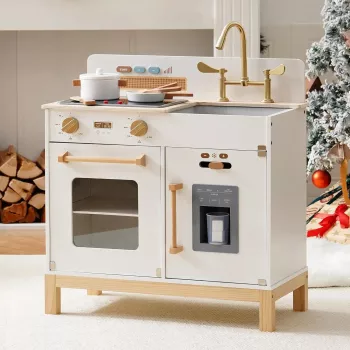
Wooden Kids Play Kitchen with Lights and Sounds – Perfect Gift for 3+
Many 3-year-olds love the extra realism, especially when effects are simple and not overly loud. Choose a set with reasonable volume and an easy on/off option, and use sounds during specific moments (like “turning on the stove”) if your child gets overwhelmed.
Start with basics like a pot, pan, spatula, cups, and plates, then add pretend food with variety (fruits, veggies, breakfast items). A small grocery bag and a simple “menu” card help kick off role-play, and a bin or basket keeps pieces from spreading across the room.
Measure the kitchen’s footprint and also plan extra room for doors to open and for kids to stand comfortably side-by-side. Placing it against a wall with clear space to the side for “serving” and cleanup usually works well.











Leave a comment