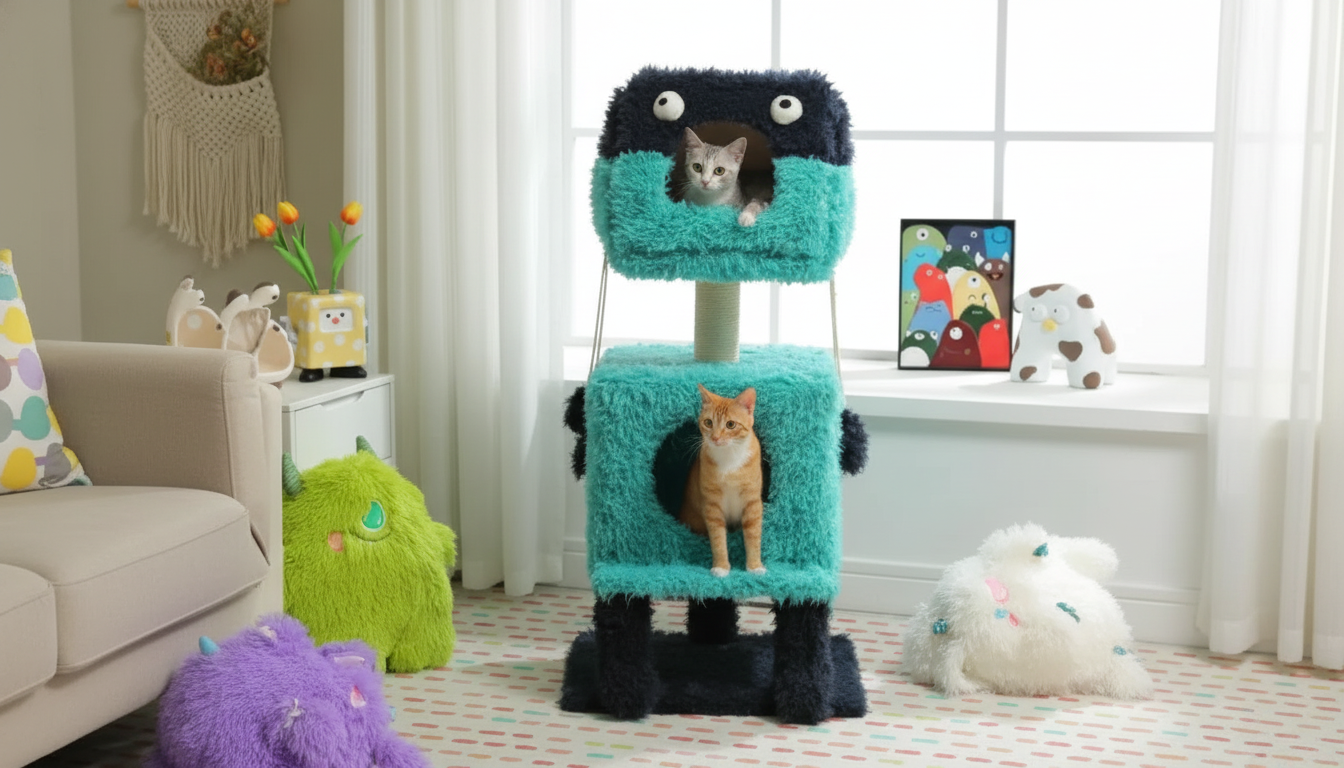
A playful, compact cat tree can make a big difference in daily comfort—adding a safe place to climb, scratch, perch, and nap. The Monster Series Cute Cat Tree Tower with Cat Condos and Scratching Post combines cozy condos with a scratching post to help cats burn energy, mark appropriately, and relax off the floor in a dedicated space. For many households, that “one spot” becomes a daily-use hub that supports calmer behavior and better routines.
The Monster Series tower is designed to be both fun-looking and functional, which matters because cats tend to use what feels stable, familiar, and rewarding. A few features help it earn repeat visits throughout the day:
For deeper behavior context, resources like International Cat Care’s scratching behavior guide explain why cats scratch and how to set them up for success.
Cats use the same piece of furniture differently depending on age, confidence, and household dynamics. This style of tower tends to work well across common scenarios:
Enrichment matters beyond furniture alone; the ASPCA’s cat enrichment ideas can help build a home setup that keeps cats engaged and less likely to seek “mischief outlets.”
Even an excellent cat tree can get ignored if it’s placed where your cat doesn’t want to spend time. Placement is often the difference between “instant favorite” and “dust collector.”
If you’re working on habit changes, the Humane Society’s cat behavior and training resource is a helpful overview for reinforcing good behaviors without escalating stress.
A tower gets used more when it smells familiar (not harshly “clean”) and feels comfortable (not matted with fur). A simple maintenance routine keeps it inviting:
| What to check | Why it matters | Quick tip |
|---|---|---|
| Floor space and clearance | Prevents tipping risks and gives room to jump down safely | Leave a clear landing zone beside the tower |
| Cat’s preferred scratching spot | Cats scratch where it’s convenient and emotionally meaningful | Place the tower near the current scratching “hot spot” |
| Household traffic level | Some cats avoid beds/condos that feel exposed | Start in a social room, then adjust if the cat prefers quiet |
| Routine maintenance plan | Clean, odor-controlled surfaces get used more often | Weekly vacuum + occasional spot-clean |
Place the tower near the current scratching area so it’s the easiest choice, then reward any interaction with treats or praise. Add catnip to the scratch surface (if your cat responds to it) and temporarily cover or block the scratched couch area while the new habit forms.
Many cats use condos as a retreat, especially in busy homes or multi-pet spaces. Putting a familiar blanket inside and placing the tower in a common room often increases use.
Put it near your cat’s preferred scratching location and along natural pathways—near doorways, sleeping spots, or main rooms—so it’s the most convenient option. Convenience matters more than “out of the way” placement.












Leave a comment