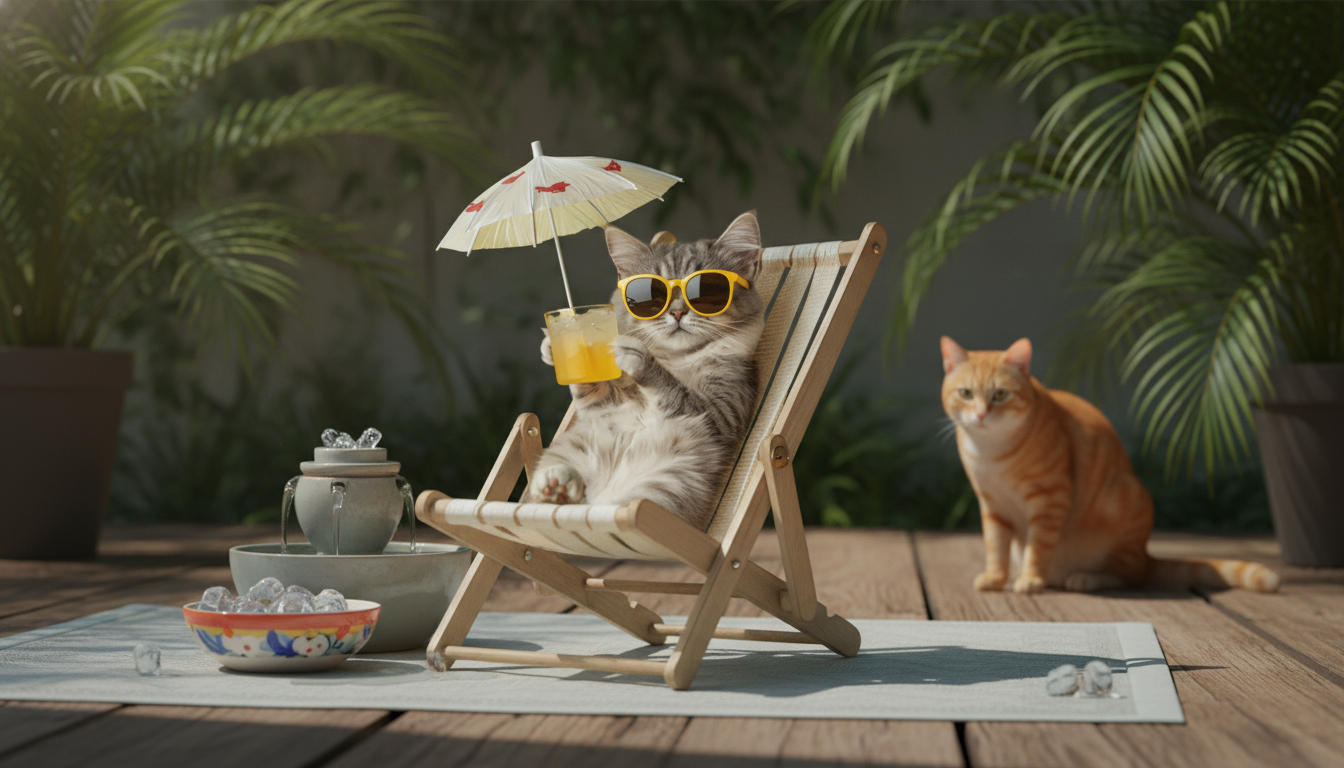
Hot, humid days can push cats past their comfort zone quickly—especially seniors, brachycephalic breeds, overweight cats, and those with heart or respiratory conditions. A few small home adjustments can make a big difference: better airflow, cooler resting spots, and easy access to fresh water. The goal is simple—prevent overheating, support hydration, and recognize early warning signs before heat stress turns into an emergency.
Cats don’t cool themselves the way humans do. They rely on a mix of limited sweating (mostly through paw pads), grooming (saliva evaporation), choosing cooler surfaces, and reducing activity during the hottest hours. When humidity climbs or air gets stagnant, those strategies lose effectiveness—and body temperature can rise faster than many pet parents expect.
Heat risk increases with thick or matted coats, flat faces (common in Persian-type breeds), dark fur, obesity, dehydration, high stress, and confinement in sunlit rooms or cars. Even indoor-only cats can overheat if windows are kept closed, air doesn’t circulate, or sun-baked floors and window perches turn into “hot plates.” Heat stress can escalate into heatstroke, which is why prevention is far safer than trying to cool a cat down after symptoms become severe.
Close blinds or curtains on the hottest side of the home, especially during midday. Create shaded zones behind furniture or in naturally cooler rooms (often bathrooms or interior bedrooms). If your cat loves watching outside, offer a shaded alternative perch rather than a full-sun windowsill.
Use fans to circulate air, but avoid aiming strong airflow directly into your cat’s face. Cross-ventilate early morning and late evening when outdoor air is cooler. If you use air conditioning, keep doors open where safe so cool air reaches your cat’s preferred lounging spots.
Ceramic tiles, a baking sheet, or a well-made cooling mat can provide quick relief. Place these in favorite nap areas and rotate locations so at least one spot stays shaded all day. Some cats enjoy a lightly chilled, towel-wrapped gel pack placed under a blanket—never directly against skin and only if your cat won’t chew it.
Warm litter rooms can discourage box use and add stress. Move litter boxes away from direct sun, dryers, ovens, or other heat-producing appliances. If your home’s coolest room is small, keep the door ajar (or use a door latch) so your cat can come and go.
Small rooms with closed doors, enclosed cat caves, and sun-drenched window hammocks can become dangerously warm. On extreme heat days, swap enclosed beds for open, breathable resting options and limit access to rooms that heat up quickly.
If you suspect heat illness, move your cat to a cool, shaded area right away. Offer small sips of water (don’t force it). Apply cool—not ice-cold—water to paws and belly, and use a fan to help evaporation. Avoid ice baths or rapid chilling; overly aggressive cooling can cause complications. If symptoms are significant or worsening, contact a veterinarian immediately. For additional hot-weather safety guidance, see the American Veterinary Medical Association (AVMA) and the Cornell Feline Health Center.
| What you notice | What it can mean | What to do now |
|---|---|---|
| Restless, seeking tile or bathtub | Mild heat discomfort | Offer a cool surface, increase airflow, refresh water |
| Drooling, rapid breathing, mild panting | Heat stress starting | Move to cooler area, cool damp cloth on paws/belly, call vet for advice if persistent |
| Vomiting, marked lethargy, heavy panting | Escalating heat illness | Begin gentle cooling and contact a veterinarian urgently |
| Collapse, seizures, pale/blue gums | Possible heatstroke | Emergency: immediate veterinary care while cooling with fan + cool water (no ice bath) |
If you want a step-by-step refresher you can keep on your phone or share with a pet sitter, see Purr-fectly Cool Cats: A Complete Guide to Keeping Your Feline Cool & Comfortable in Hot Weather. For dog households managing summer routines too, The Pawsome Dog Food Switch Checklist: Make the Change Without the Chaos! – Easy Transition Guide for Dog Parents can help streamline feeding transitions without added stress.
For broader hot-weather safety tips across pets, the ASPCA hot weather safety guide is another helpful reference.
Cats only sweat minimally, mainly through their paw pads. They cool down more through grooming, seeking cooler surfaces, and reducing activity, which is why high humidity and poor airflow can make overheating more likely.
Shaving is usually not recommended unless a veterinarian specifically advises it. Regular brushing to remove loose undercoat and mats is typically safer, and shaving can increase sunburn risk and skin irritation.
Move your cat to a cooler, shaded area, offer small sips of water, and gently cool paws and belly with cool water while using a fan to aid evaporation. If panting persists, worsens, or comes with weakness, vomiting, or pale/blue gums, contact a veterinarian immediately.










Leave a comment