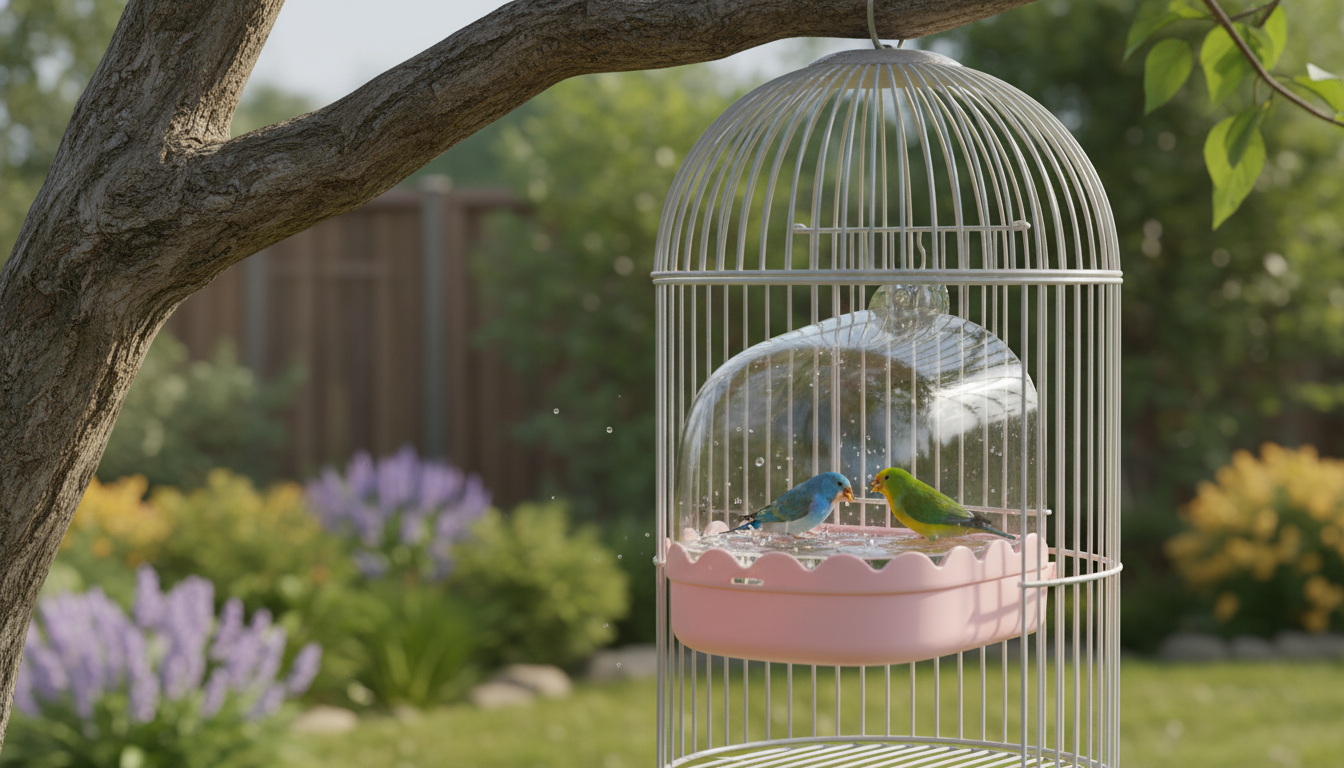
A reliable water source can make a yard, patio, or balcony more welcoming to birds—especially during hot, dry, or freezing periods. A hanging bird bath box is an easy option for small spaces because it lifts the water off the ground, keeps it visible, and can be placed near cover where birds feel safer.
A hanging bird bath box is a compact, hangable container designed to hold water for birds to drink and bathe. It’s typically used on tree branches, hooks, pergolas, shepherd’s hooks, or sturdy balcony mounts—creating a consistent “water stop” without taking up ground space. It can also work as a second water station when a ground birdbath is already in use, which helps reduce crowding during busy times of day.
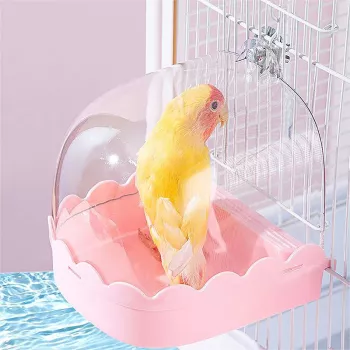
If you want a simple, budget-friendly option for a dedicated water spot, take a look at the Hanging Bird Bath Box.
Many birds readily use elevated water stations because height can improve both comfort and safety. Visibility is a big factor: when a bath is raised, birds can scan more easily for predators while they drink or splash. Elevation can also mean cleaner access, since there’s typically less soil splash and fewer lawn clippings compared to ground-level basins.
Another advantage is placement control. An elevated bath can be positioned near shrubs for quick escape cover—without being too close—so birds can retreat quickly but still keep clear sight lines. Finally, adding variety helps: different species may prefer different heights and levels of enclosure, and a second station can reduce competition between timid and bold visitors.
Choose a stable support that won’t sway excessively in the wind. Gentle movement is usually fine, but heavy swinging discourages bathing and can spill water quickly. A good target is placing the bath about 5–10 feet from dense cover (shrubs or small trees). That distance gives birds a fast retreat route while keeping the bath open enough for them to watch for danger.
To keep your outdoor area comfortable for people, avoid spots directly above patios or walkways if droppings or splashes would be an issue. And for bird safety, keep it out of reach of cats where possible—avoid low, easy-to-pounce locations. If you’re hanging one on a balcony, choose a hook rated for outdoor use and keep the bath away from rail edges where it could be bumped by doors, furniture, or foot traffic.
In mosquito-prone areas, changing the water regularly helps prevent breeding. Guidance on reducing mosquito habitat often emphasizes eliminating standing water around the home; frequent water changes are a practical way to do that while still supporting wildlife (see the U.S. Environmental Protection Agency for broader mosquito-control information).
During disease alerts in local wildlife advisories, increase cleaning frequency and consider temporarily removing communal water sources if recommended by local agencies. For general birdbath best practices, resources such as the Cornell Lab of Ornithology (All About Birds) can be helpful.
Summer: Provide partial shade to slow evaporation and keep water from becoming overly warm. During extreme heat, water access can be especially important; the National Audubon Society shares seasonal guidance that can help shape a heat-ready backyard routine.
| Feature | Why it matters | Practical tip |
|---|---|---|
| Stable hang point | Prevents sloshing and discouraging movement | Use a sturdy hook; avoid thin, flexible branches |
| Shallow water access | Reduces drowning risk and encourages bathing | Add clean stones for grip and varied depth |
| Easy cleaning | Cleaner water means more visits | Dump and rinse frequently; scrub when needed |
| Smart placement | Birds prefer safety plus visibility | Put near cover but not hidden inside dense shrubs |
The Hanging Bird Bath Box is designed as a compact, budget-friendly way to add a dedicated water spot, especially where a pedestal bath would feel bulky or impractical. It pairs well with bird-friendly plantings and can sit near a feeder (kept at a hygienic distance and cleaned regularly) so birds can eat, drink, and preen in the same general zone without crowding a single station.
Best results come from routine: keep the bath in a predictable location, offer fresh water, and stick to a simple cleaning schedule. If you’d like to observe visits more closely—especially on a balcony or shaded corner—an outdoor-capable camera can help you learn which times and placements get the most activity. The Ultra HD 4K Mini WiFi Camcorder with IR Night Vision & Motion Detection is one option for keeping an eye on backyard wildlife patterns.
Aim for several feet off the ground—high enough to be less accessible to easy predators but still low enough that refilling is simple. Prioritize a stable hanging point, place it near escape cover, and keep sight lines open so birds can scan while they bathe.
Change it frequently—daily in hot weather or during heavy use, and at least every couple of days in mild conditions. Scrub whenever you see algae or debris buildup; frequent changes also help reduce mosquito breeding.
Avoid adding chemicals. The safest approach is physical cleaning, regular water changes, and smart placement (like partial shade), with optional clean stones for footing. During local wildlife disease advisories, follow official guidance on cleaning frequency or temporary removal.











Leave a comment