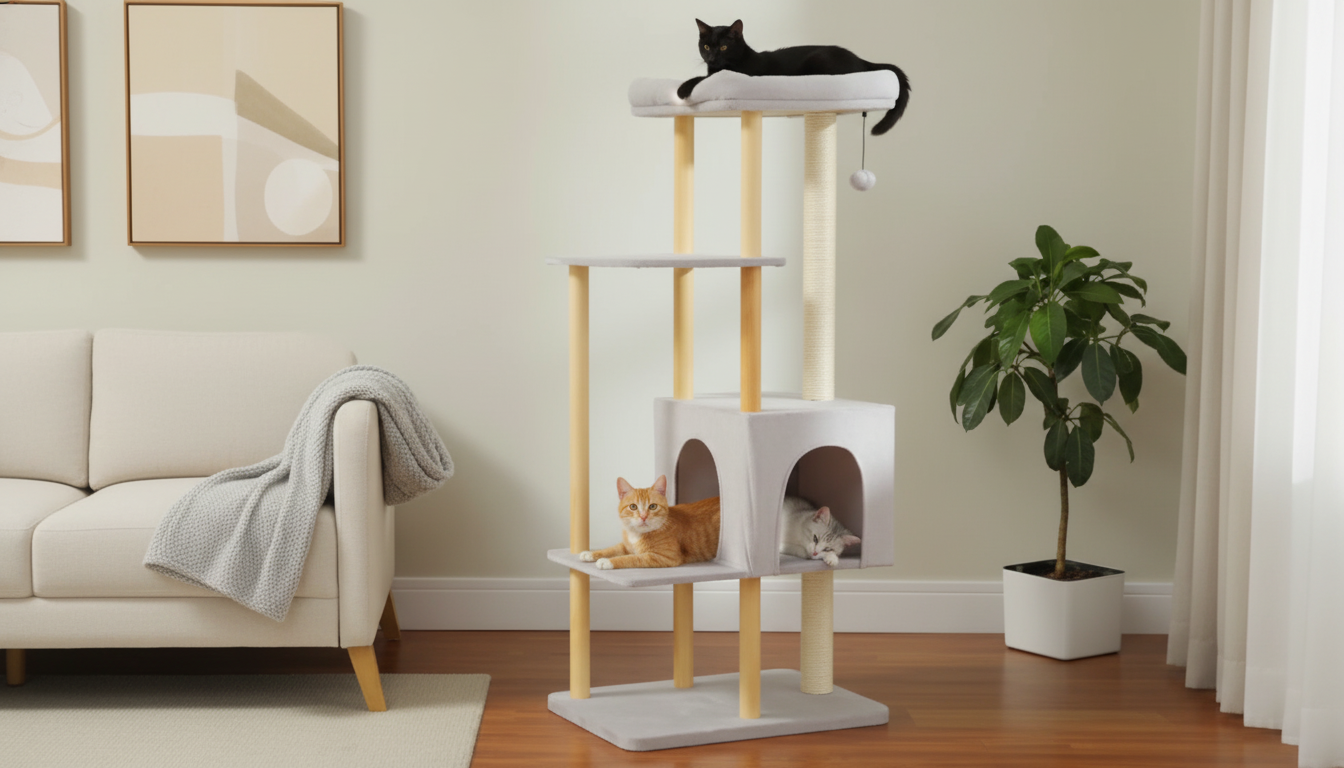
A modern wooden cat tree can add vertical territory, scratch-friendly surfaces, and a calm lounging zone without overwhelming the room. This 53-inch design suits multi-cat households and bigger breeds by combining sturdy platforms with dedicated scratching posts to support climbing, stretching, and daily nail care.
Cats thrive when their home includes “upward options.” A 53-inch wooden cat tree creates a consistent place to climb, watch, and decompress—especially useful in apartments or rooms where floor space is limited.
Scratching and climbing aren’t “extra” behaviors; they’re core daily needs. Resources like the ASPCA’s overview of scratching behavior highlight how normal and necessary scratching is for cats, while veterinary behavior guidance from the Cornell Feline Health Center supports building environments that let cats express natural behaviors safely.
For larger breeds or athletic adult cats, the goal is not simply “taller.” The real win is a structure that feels rock-solid during launches, turns, and full-body stretches.
| Feature | What to check | Why it matters |
|---|---|---|
| Base and frame | Wide base, solid wood panels, minimal sway when pushed | Helps prevent tipping and builds cat confidence |
| Perch size | Enough area for your cat to lie on its side comfortably | Reduces falls and increases daily use |
| Scratch posts | More than one post; placed where cats naturally pass/launch | Improves scratching compliance and nail health |
| Multi-cat flow | At least two routes up/down when possible | Cuts down blocking and resource guarding |
| Maintenance | Wipeable surfaces; replaceable scratch components if available | Keeps the tree usable longer and cleaner |
Scratching is normal—and essential. It stretches the shoulders and back, helps shed nail sheaths, and leaves scent and visual markers that help cats feel oriented and secure.
A 53-inch cat tree is tall enough to create a “lookout” without dominating a space, but placement determines whether it becomes a favorite spot or a piece of unused furniture.
The best approach is to make the cat tree feel like the easiest, most rewarding place to do “cat things.” Forced introductions can backfire, especially for shy cats.
It can be, as long as the base is wide and the platforms are spacious enough for your cat to turn and sprawl comfortably. For large cats, stability and perch size usually matter more than adding extra height.
More than one is ideal, especially if the posts sit at different heights and along common “launch” paths. Adding a separate scratcher in another room can further reduce competition and guarding.
Place it near a window or along a route your cats already travel, preferably with a wall or corner behind it for security. Avoid loud appliances, and if your cat is currently scratching furniture, start by placing the tree near that spot.












Leave a comment