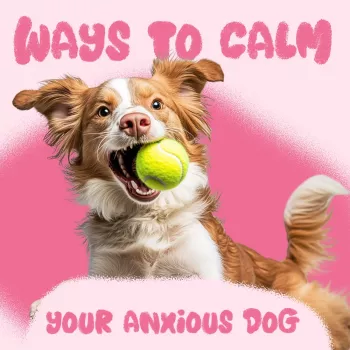
Dog anxiety can show up as pacing, trembling, barking, hiding, destructive behavior, or bathroom accidents—often triggered by noise, separation, unfamiliar places, or changes at home. A calm plan blends management, gentle training, and supportive routines so your dog feels safe while learning new coping skills. The goal isn’t to “toughen them up,” but to reduce stress, build predictability, and reinforce calm choices.
Anxiety isn’t always dramatic. Many dogs show subtle stress signals long before a full meltdown. Common signs include panting when it’s not hot, a tucked tail, whale eye (showing the whites of the eyes), lip licking, yawning, trembling, pacing, clinginess, reactivity, chewing or scratching at doors, and reduced appetite.
Typical triggers include separation, fireworks or thunder, visitors, vet and grooming appointments, car rides, novel environments, a trauma history, lack of a predictable routine, and being under-stimulated (bored) or over-aroused (too much excitement without enough rest).
It’s also important to tell anxiety apart from boredom or pain. Sudden behavior changes, nighttime restlessness, or new sensitivity to touch can point to discomfort. A veterinary check can help rule out medical causes early and prevent a training plan from missing the real problem. For general guidance on behavior concerns, the American Veterinary Medical Association (AVMA) and the ASPCA both offer helpful overviews.
Avoid “flooding” (forcing a dog to endure the scary thing until they “get used to it”). Flooding often backfires by intensifying fear, increasing panic, and making the next exposure worse.
Management reduces your dog’s daily stress load so their brain is available for learning. Start with a calm zone: a crate, pen, or bed in a quiet area, with soft bedding, water access, and a predictable “no surprises” setup. The calm zone should be introduced with positive associations (treats, chews, and calm praise), not used as a place for punishment.
Next, reduce trigger intensity where you can. Close curtains if your dog is reactive to outside motion. Add white noise or a fan to soften sudden sounds. Increase distance from busy windows and doors. Schedule walks during quieter hours if crowds or traffic are stressful.
For predictable noise events (storms, fireworks, neighborhood celebrations), plan ahead. Give a potty break before the noise starts, then guide your dog into their safe zone with a calming activity like a lick mat or food puzzle. During the event, keep your own movements and voice relaxed and matter-of-fact.
Most importantly: avoid punishment for fear behaviors. Scolding a trembling or barking dog often adds stress and reduces trust, making anxiety harder to resolve long-term.
Natural tools work best when they’re part of a routine—not a last-minute fix. Think of them as supports that shift your dog from “amped up” to “able to settle.”
| Day | Focus | What to Do | Goal |
|---|---|---|---|
| 1 | Safe zone | Set up a quiet resting spot; introduce it with treats and a chew | Dog chooses the area voluntarily |
| 2 | Decompression | Sniff walk + scatter feeding at home | Lower arousal after activity |
| 3 | Settle cue | Reward calm on bed; add a simple cue like “settle” | 10–20 seconds of relaxed staying |
| 4 | Trigger at low level | Play trigger sound very softly while treating | Dog stays comfortable and engaged |
| 5 | Enrichment routine | Lick mat + puzzle feeding during a predictable time window | Dog anticipates calm activities |
| 6 | Separation micro-practice | Step out for seconds; return before stress escalates | Calm for several tiny departures |
| 7 | Review and adjust | Repeat easiest wins; increase only one variable slightly | Improved recovery time and confidence |
If you want a structured, gentle plan you can follow day by day, Peaceful Paws: Natural Ways to Calm Your Anxious Dog (eBook) lays out practical routines, natural relief options, and training strategies designed for real households.
Diet changes can also affect stress and digestion for some dogs, and transitions are often when anxious behaviors spike (pacing, appetite changes, stomach upset). If a food switch is on your calendar, The Pawsome Dog Food Switch Checklist provides a simple, low-drama way to change foods while monitoring tolerance and keeping routines steady.
It varies by trigger type, history, and consistency, but many dogs show early wins within days once routines and management reduce daily stress. Bigger, lasting change from gradual training often takes weeks to months, especially for separation anxiety or noise phobias. Tracking recovery time and the point where your dog goes “over threshold” helps you measure progress realistically.
Not always—check with a veterinarian first, especially if your dog is on medications, pregnant, or has liver or kidney concerns. Evidence varies by product, and correct dosing matters; monitor for sedation, stomach upset, or behavior changes. If anything seems off, stop and get veterinary guidance.
Avoid punishment, yelling, forced exposure (“flooding”), tight confinement that increases panic, and inconsistent routines that keep your dog guessing. Reward-based training that stays below your dog’s stress threshold is safer and helps your dog learn without adding fear. When in doubt, make the trigger easier and rebuild confidence step by step.












Leave a comment