Why a daily feeding checklist helps
A consistent feeding routine is one of the easiest ways to support steady energy, comfortable digestion, and a healthy body condition. A simple daily checklist turns “Did someone feed the cat?” into a clear, trackable answer—especially when schedules get hectic.
- Prevents accidental double-feeding in multi-person households (or when a pet sitter helps).
- Makes portion control easier when mixing wet and dry food—no more eyeballing.
- Helps spot appetite changes early, which can be a common first sign that something’s off.
- Creates a useful record for vet visits: food type, amounts, treats, and notes.
- Reduces stress for cats that thrive on predictable routines and reliable “meal signals.”
For a deeper overview of how nutrition fits into overall wellness, the WSAVA Global Nutrition Guidelines and the AAHA Nutritional Assessment Guidelines are helpful references to discuss with your veterinarian.
Set up your cat’s baseline before tracking
Before you start checking boxes, establish a “normal” starting point. The goal isn’t perfection—it’s consistency, so small changes become obvious.
- Confirm life stage: kitten, adult, or senior. Note spay/neuter status and activity level (active cats often need more calories than couch champions).
- Pick a feeding schedule: consistent meal times (or measured micro-meals) that match your household rhythm.
- Choose a measuring method: a gram scale is the most consistent option; measuring cups can vary with kibble shape and settling.
- Write down the full diet: brand/recipe, wet vs. dry, toppers, dental treats, supplements, and any lickable treats.
- Note special needs: hairball formula, urinary support diets, sensitive stomach plans, weight management, or prescription diets.
If you’re unsure what “normal” should look like for your cat, the Cornell Feline Health Center offers practical, vet-backed guidance to bring into your next appointment.
Your daily cat feeding checklist (morning, evening, and “anytime”)
Think of your checklist as three mini-routines: morning, evening, and “anytime something changes.” Keep notes short—one line is enough to spot patterns later.
Morning checks
- Refresh water and give bowls a quick rinse if needed.
- Serve a measured portion (grams, fraction of a can, or pre-portioned container).
- Confirm medication or supplements (if applicable) and note if it was accepted.
- Quick litter box scan: stool/urine changes can pair with appetite changes.
Evening checks
- Serve the second measured portion (or your planned micro-meal allotment).
- Record treats given (including “just a bite” of human food).
- Do a fast body feel check: ribs, waist, and belly tuck—no measuring tape required.
Anytime checks (the “drift” detectors)
- Track vomiting, refusal to eat, sudden begging, or food-stealing.
- Use a household handoff: add initials next to each feeding to prevent overlap.
- Weekly add-on: weigh your cat (or do a consistent body condition check) and adjust food only in small steps.
Daily feeding tracker example (copy into a planner or print as a sheet)
| Time |
Food served |
Amount |
Water refreshed |
Treats |
Notes |
| AM |
Wet food (recipe) |
1/2 can |
Yes |
0 |
Ate promptly; normal litter box |
| Midday (optional) |
Dry food |
10 g |
— |
2 treats |
Puzzle feeder; slow eating |
| PM |
Wet + dry |
1/2 can + 10 g |
Yes |
0 |
Left a bite; monitor appetite |
Portions that make sense: balancing wet, dry, and treats
Portion planning gets much easier once you treat everything as part of the daily total—wet food, dry food, toppers, and treats. The checklist helps keep the plan steady even when your week isn’t.
- Keep treats small and trackable: Treats should stay a small slice of daily intake. Write them down like any other calories.
- Choose your wet/dry split first: Decide what’s realistic for hydration goals, budget, and your cat’s preferences—then keep it consistent for a couple of weeks before evaluating.
- Watch for “topper creep”: Broths, sprinkles, and lickable treats can quietly turn into a second meal. Log toppers every time.
- Change foods gradually: Most cats do better with transitions over 5–10 days, especially sensitive stomachs.
- Adjust slowly for weight changes: Make small tweaks, then reassess after 1–2 weeks rather than making big jumps day-to-day.
Hydration and feeding environment: the overlooked essentials
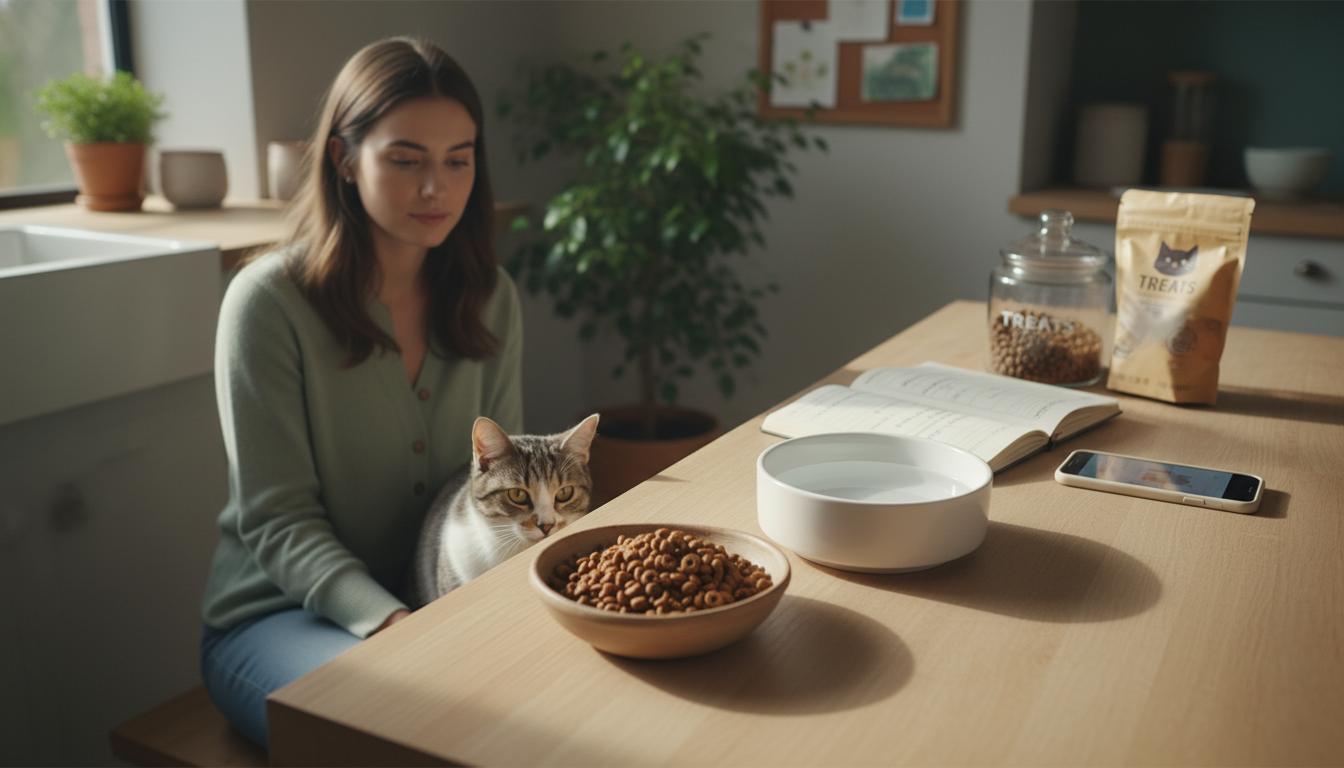
Consistent portions matter, but so does the setup. Many “picky eater” problems improve when hydration and the feeding environment get a simple upgrade.
When the checklist shows a red flag
A simple routine for busy days (print, post, and check off)
Printable tools to make consistency effortless
FAQ
How many times a day should a cat be fed?
Many adult cats do well with measured meals at least twice daily, while kittens often need more frequent meals and seniors may benefit from smaller, consistent portions. The best schedule is one you can follow reliably, and cats with medical conditions should follow a veterinarian’s feeding plan.
Is wet food or dry food better for cats?
Wet food can support hydration and is often highly palatable, while dry food is convenient and easy to measure, though dental benefits are usually limited without an overall dental plan. Either can work well if it’s complete and balanced and portions (including treats) are measured consistently.
How can a feeding checklist help with weight management?
Logging exact amounts (grams/cans) and treats prevents “calorie creep” and makes it easier to adjust portions gradually. Over time, the notes help connect what was fed with changes in weight or body condition so you can fine-tune more confidently.
Recommended for you












Leave a comment