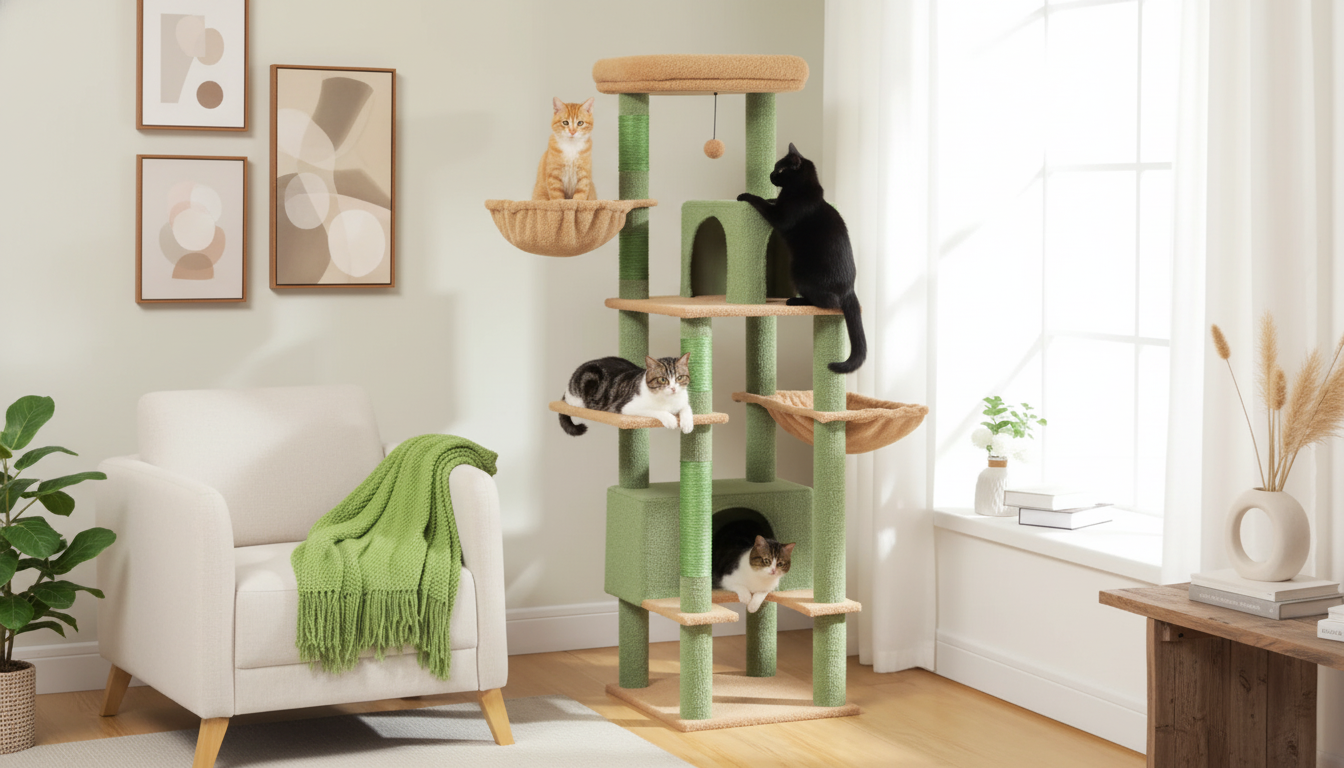
A well-designed cat tree adds vertical territory, scratching outlets, and cozy rest spots—helping indoor cats burn energy, reduce boredom, and feel secure. The best choice depends on space, cat size, activity level, and how many cats will share it. When the layout fits your home and your cat’s habits, a cat tree quickly becomes the “default hangout” for naps, lookout duty, and quick play breaks.
Indoor cats still carry the instincts of skilled climbers and perch-lovers. A cat tree turns a flat room into usable territory, which can make everyday life feel more interesting and predictable.
For more on why a cat’s environment matters, see guidance from International Cat Care (iCatCare) and enrichment ideas from the ASPCA.
There’s no single “best” cat tree size—only the best fit for your floor plan and your cat’s body and confidence. The goal is a setup your cat can use daily without wobble, awkward jumps, or blocked routes.
| Cat situation | What to look for | Why it helps |
|---|---|---|
| Single young/active cat | Tall height, 2+ perches, dangling toy, multiple levels | More climbing and play outlets |
| Large cat | Wide platforms, sturdy base, thick posts, higher weight rating | Safer lounging and less wobble |
| Two or more cats | Multiple perches and routes, at least two scratch posts | Reduces crowding and competition |
| Shy or anxious cat | Covered condo + high perch, placed in a quieter area | Creates a secure retreat |
| Senior cat | Lower steps, easy-access platforms, softer resting spots | Less strain on joints |
Two cat trees can look similar online but feel very different to a cat once they start sprinting, leaping, and scratching. These practical details tend to decide whether the tree becomes a favorite or a dust collector.
If you’re building a calmer home setup overall, behavior and enrichment resources from the AAHA can be a helpful supplement to adding vertical space.
Placement is often the difference between “ignored” and “can’t live without it.” Cats choose locations that offer a view, a sense of control, and a predictable routine.
A cat tree should be a confidence booster—not a tipping hazard. A quick inspection routine and the right layout choices can keep play safer and reduce tension between cats.
If you’re shopping for a taller, space-efficient setup, consider the Large Cat Tree for Indoor Cats.
For pet parents juggling multiple routines at home, this digital guide can help streamline one common transition: The Pawsome Dog Food Switch Checklist: Make the Change Without the Chaos! – Easy Transition Guide for Dog Parents.
Match height to your cat’s mobility and habits: active cats often enjoy taller options with multiple levels, while seniors usually do better with lower, step-like platforms. A stable, non-wobbly tree matters more than maximum height.
A spot near a window or an area your cat already likes tends to get the most use, as long as it’s away from loud appliances and busy doorways. If you’re redirecting scratching, place the tree close to the current problem area first.
Make the tree rewarding and familiar with treats on platforms, a favorite blanket, and short play sessions nearby; catnip can help for cats that respond to it. Avoid forcing use—most cats warm up faster when they can explore at their own pace.











Leave a comment